
A good bag should not look new after ten years. It should look like it has been used, and it should look better for it. For me, that is why the leather matters as much as the design.
I came to leatherwork through an interest in design, construction and materials. Much of what I know I learned by myself: studying how things are made, then testing those methods on the bench until I understood why they work. That experience taught me that a good object starts with the material.
Where the leather comes from
Radermecker is a tannery in Comines-Warneton, Belgium, with more than 150 years of experience. Its tradition is equestrian leather: saddlery, harness and the equipment that has to perform under real use. That is a demanding standard, and it is the main reason I work with their leather.
Radermecker combines traditional craftsmanship with modern production. The leather is developed with a clear purpose: to be strong, natural and long-lasting.
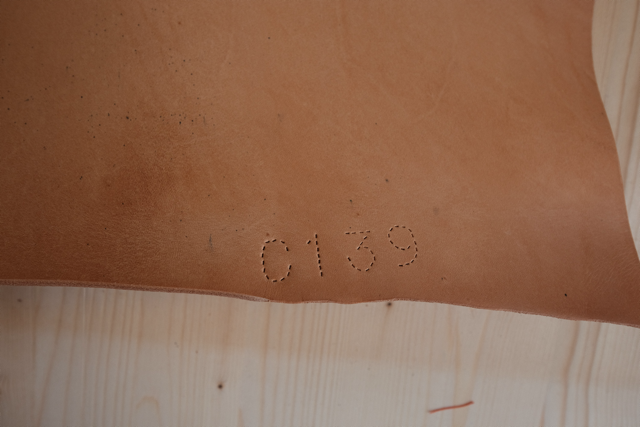
Every piece can be traced back to its origin
The number tells you where the leather comes from
Vegetable tanning, in plain terms
Vegetable tanning uses plant-based tannins to turn raw hide into leather. The process takes time, often weeks rather than hours, and it works with the structure of the hide instead of covering it up. The result is leather that keeps its natural character and develops colour and patina as it is used.
Why Niagara
Niagara is a full-grain, vegetable-tanned saddlery leather. I choose it because the grain stays visible, the surface is not artificially smoothed, and the natural variations remain part of the hide.
When I cut a bag, belt or lead, I work with the leather as it is. That means small differences in grain, colour and marks. I see those as part of the character of the material, not as flaws to hide.
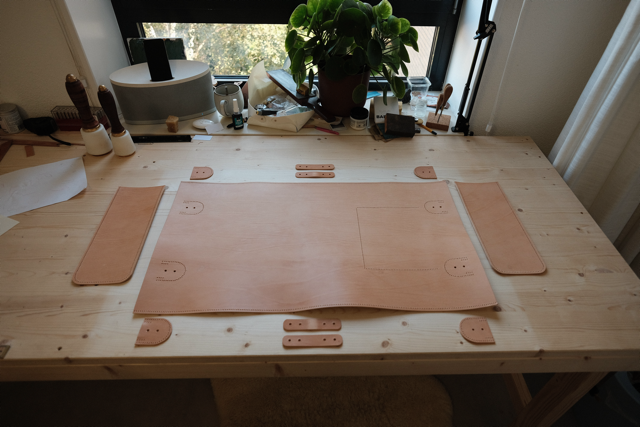
From a single hide to a tote made for daily use
Before our designs becomes Studio Pieces, it is a hide
Thickness is a choice
Not every product needs the same leather. Each piece calls for its own weight and type of hide:
Our most-used leathers are the 1.5–3.5 mm Niagara shoulders.
I use them most often for our Tote Bags, our Utility Bags and many everyday carry (EDC) pieces. They are flexible enough to be comfortable, yet firm enough to hold their shape without becoming stiff.For belts, dog leads and bag straps we use 3.5–4.5 mm Niagara butt.
The butt is the strongest section of the hide, which makes it suited to anything that carries load every day, from a belt to the strap of a fully loaded bag.
Choosing the thickness is part of the design. It is one of the first decisions I make for every piece.
What it means for you
Natural leather changes with use. The colour deepens, the surface softens and the marks of daily life settle into the material. Solid brass hardware develops its own patina alongside it.
That is not a defect. It is the reason I make things to be used.
Made for a life of use
Each piece is made by hand, one at a time, in our workshop in Friesland. I am responsible for every step, from choosing the leather to the final stitch, and that responsibility shapes how I work.
If you are looking for a bag, belt or lead made from leather that is meant to age with you, get in touch.